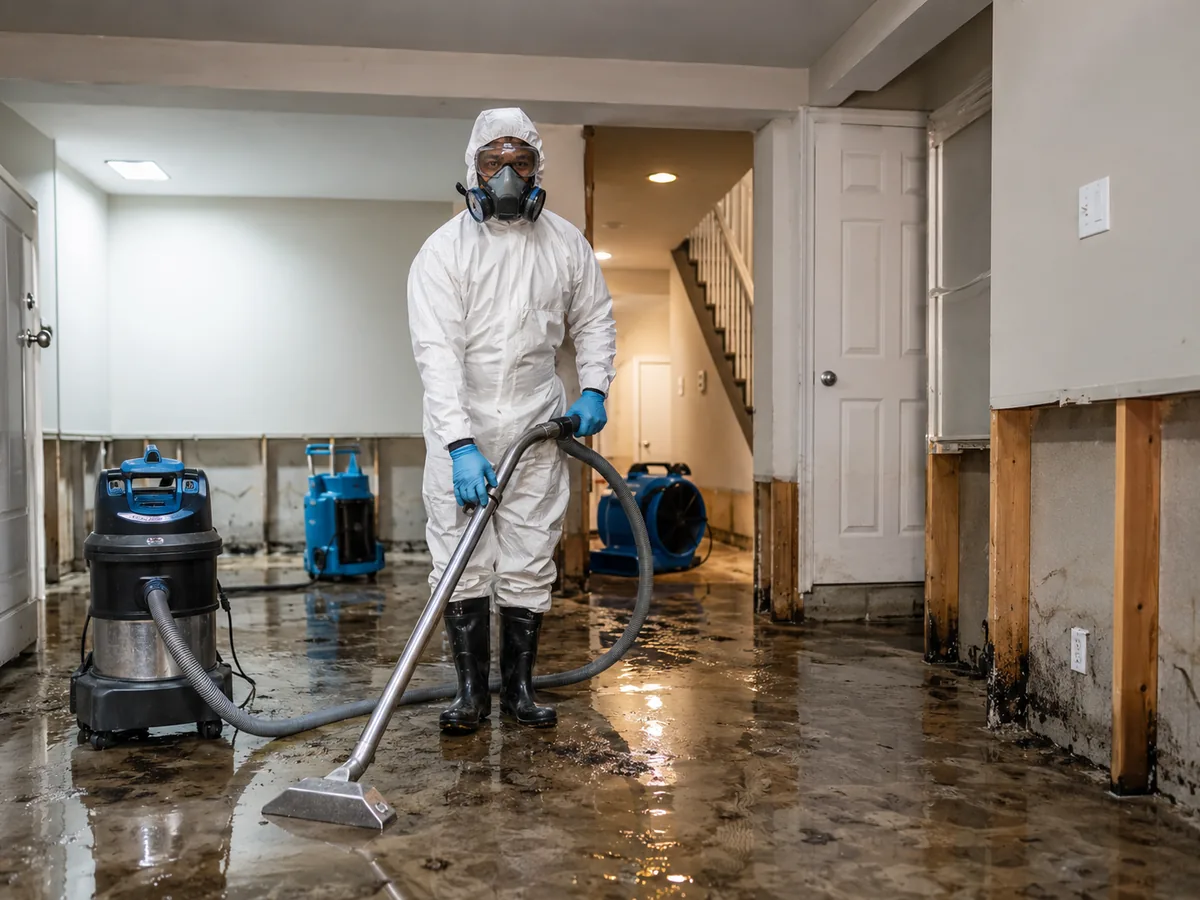
A sewage backup is considered contaminated water and requires different handling than clean or gray water situations, both for safety and for proper sanitization of affected materials.
Why sewage backups are treated differently
Contaminated water carries bacteria and pathogens that require specialized cleaning and, in some cases, removal of porous materials that can't be safely sanitized.
Staying safe until help arrives
Avoid direct contact with the water, keep children and pets away from the affected area, and ventilate the space if possible without disturbing the contaminated water further.
What cleanup typically involves
Extraction, disposal of unsalvageable contaminated materials, sanitization of the affected area, and drying, generally by a provider experienced specifically with contaminated water.
Dealing with this right now?
Call (855) 317-2617 and we'll connect you with a local provider immediately.